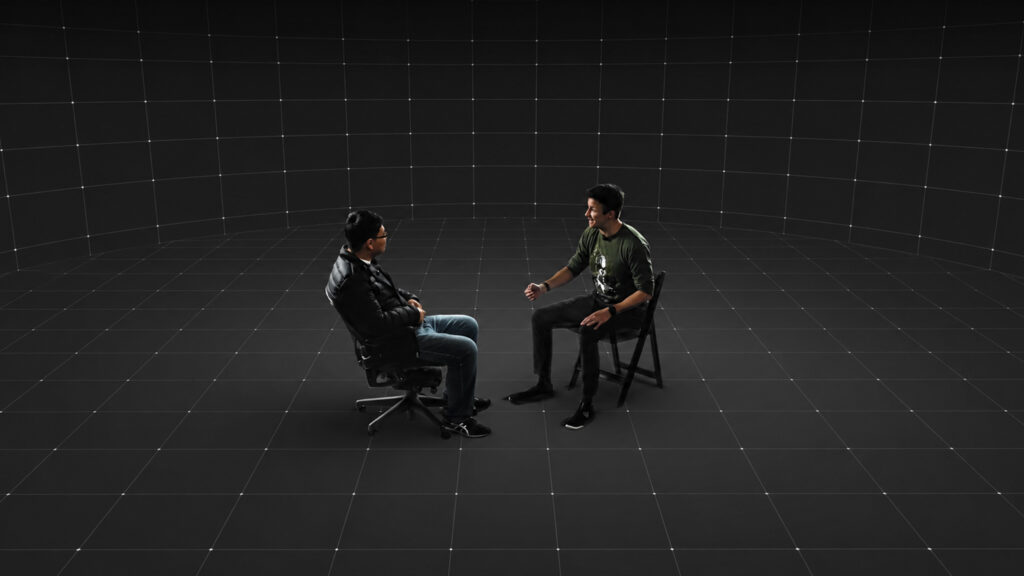
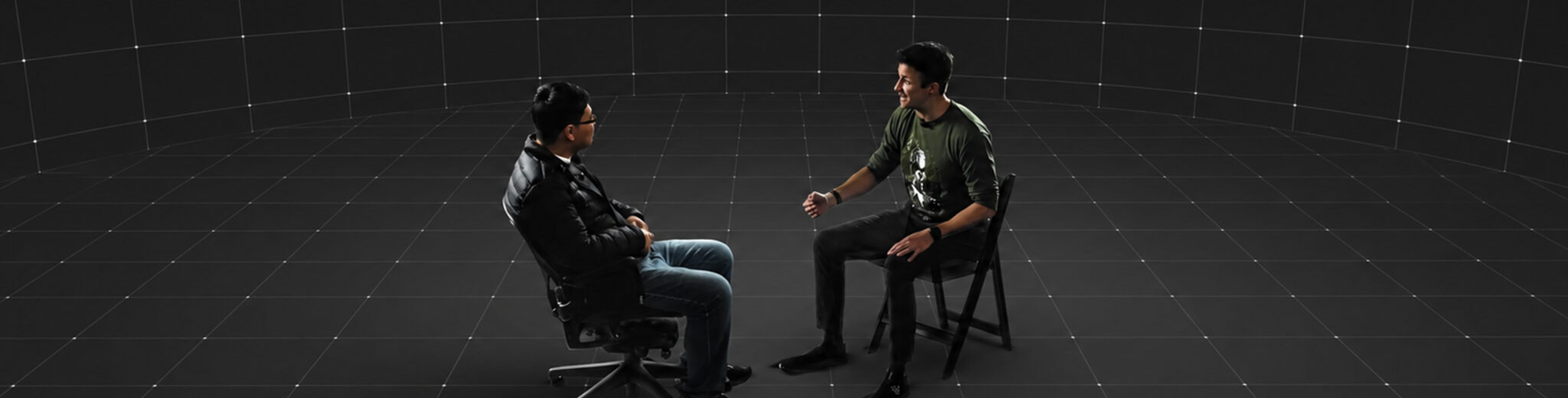
What if a livestream were no longer a flat screen, but a space you could look around in? What if you could view an action from every angle, approach a product digitally or see a speaker spatially instead of as a webcam window? 4D Gaussian Splatting points in that direction.
From flat video to spatial video
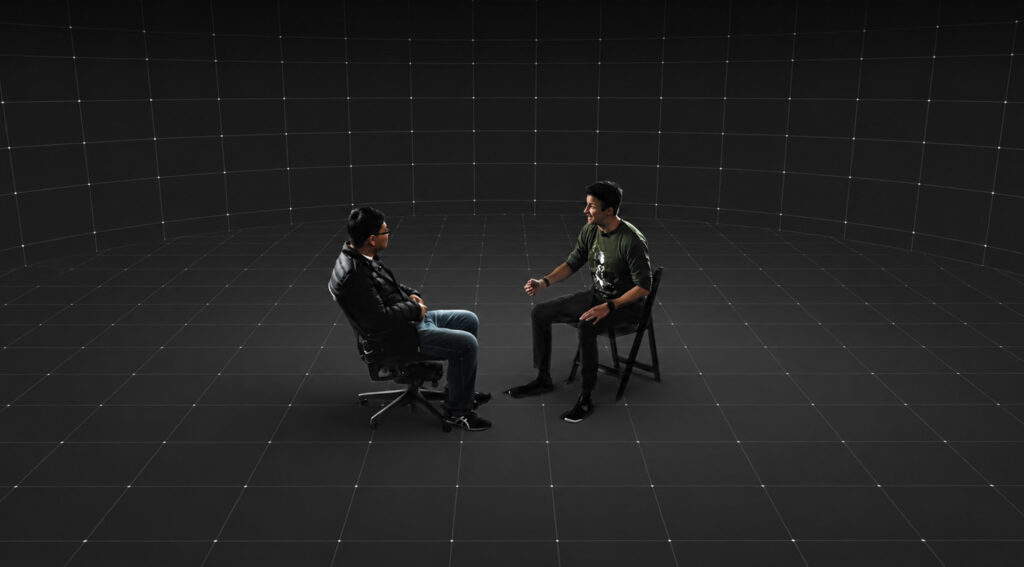
A traditional livestream is usually directed from fixed camera positions. The viewer sees what the director chooses: a speaker, a presentation, a product or an action. With techniques such as Gaussian Splatting, a scene can be captured as a photorealistic 3D reconstruction.
The 4D version adds movement and time. That means you do not only get a 3D image, but a moving scene that you can virtually move through.
Why this is fascinating
Videos by creators such as Corridor Crew show why this technology captures the imagination. It is not classic CGI and it is not a normal recording. It is a realistic reconstruction of reality that can be explored from new angles.
For live communication, that is an interesting shift. Video stops being only a registration and starts becoming an experience.
What could this mean for events?
For product launches, training sessions, medical demonstrations, technical explanations or cultural events, spatial video could add a new layer. Viewers could move closer to the object, choose a viewpoint or revisit a moment from another angle.
That does not mean every livestream should become 3D. Most online events need clarity, rhythm and good storytelling first. But for specific situations, spatial video could make complex information easier to understand.
The challenge: production, direction and access
The technology is promising, but it also raises practical questions. How many cameras are needed? How much processing power is required? How do you direct an experience when viewers can choose their own angle? And how accessible is it for an audience that simply wants to watch on a laptop?
Hype or future?
For now, 3D livestreaming is not the standard. But it is a serious signal. Live video is moving from flat registration towards more immersive forms of communication. At Valo, we follow these developments because they help us think about what live communication could become next.
Want to discuss an online, hybrid or live event? Contact Valo Online Events.