Webcasting has become a normal part of professional event communication. Organisations have discovered the benefits of livestreaming, while invitees are more critical about attending physical events. A webcast can make your event more accessible and extend its reach.
What is webcasting?
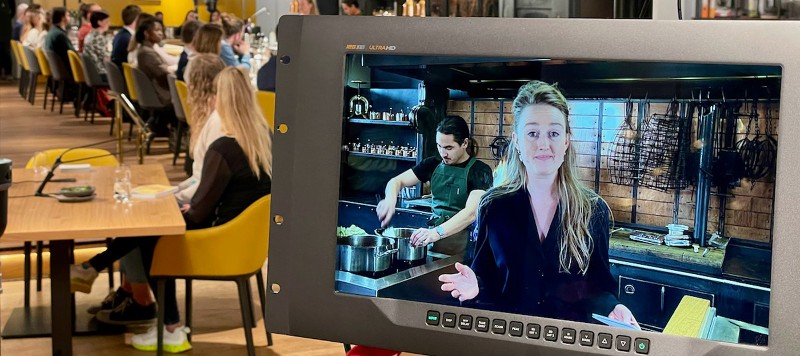
Webcasting is the live broadcast of an event to an online audience. A webcast can include video and audio, or in some cases audio only. It allows an event to be streamed virtually to viewers who are not present in the room.
Related terms include livestream, online event and online conference. The exact label matters less than the goal: making your message available to a larger audience in real time.
Webcast or webinar?
A webcast is usually aimed at a larger audience and often has a more broadcast-like character. A webinar is typically smaller, more educational and more interactive. Participants often register in advance and can ask questions through chat or other tools.
Interaction is possible in a webcast as well, for example through polls, quizzes or moderated questions. But the balance is usually different: a webcast focuses more on reach and broadcast quality.
Benefits of webcasting
- People can attend without travelling.
- The event becomes more accessible and inclusive.
- Capacity is less limited by the physical venue.
- The recording can be reused for marketing, training or internal communication.
- A professional webcast gives your organisation a broader stage.
Ways to use webcasting
A webcast can be a simple presentation, a panel discussion, an award show, a large meeting, a lecture or a full event broadcast. More complex webcasts use multiple cameras, several speakers and a tight production script.
Want to organise a webcast?
Valo has years of experience producing livestreams, webinars and webcasts. We help with the technical setup, the platform, the programme flow and the broadcast itself. Contact us if you want advice for your webcast.
Want to discuss an online, hybrid or live event? Contact Valo Online Events.